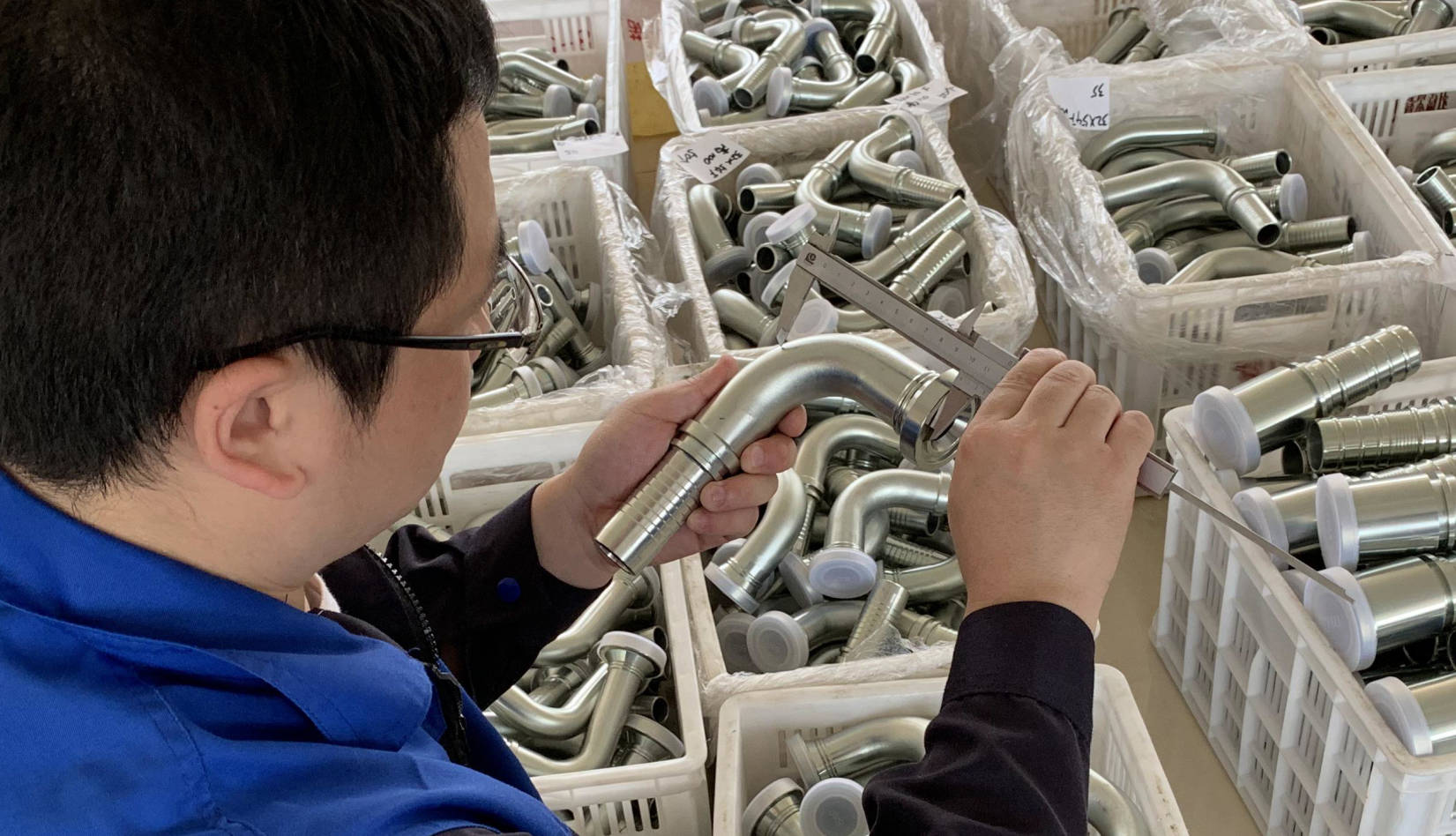
How to Choose the Right Hydraulic Hose Fittings for Your Application
Choosing the proper hydraulic hose fittings means confirming the connection type, thread standard, sealing method, dimensions, pressure requirements, and hose compatibility before assembly. A hydraulic fitting may look similar to another connection while using a completely different sealing surface, which can lead to leakage, downtime, or premature hose failure.
Imagine that you are repairing an excavator and the replacement fitting threads into the port without resistance. Everything appears correct, yet oil starts leaking as soon as pressure builds. The problem often comes from matching only thread diameter while overlooking pitch, seat angle, sealing style, or hose compatibility. A systematic identification process removes that guesswork and helps you specify the right connection before ordering or crimping.
1. How Do You Identify the Hydraulic Fitting Type?
You identify a hydraulic fitting type by checking whether the hose end uses a permanently crimped fitting or a reusable fitting. Permanent fittings dominate modern hydraulic hose assemblies because a crimping machine compresses the ferrule around the hose reinforcement.
Image brief: Photorealistic industrial close-up comparing one crimped hydraulic hose fitting with one reusable fitting on a clean workshop bench.
Is the fitting permanent or reusable?
Here’s what you should check. A permanent fitting normally has a compressed ferrule that becomes part of the finished hose assembly, while a reusable design can normally be assembled mechanically without a production crimper.
- Look for a compressed metal ferrule.
- Check whether the fitting body can be unscrewed.
- Inspect old equipment carefully before assuming the connection type.
- Record the hose size before removing damaged components.
Why does fitting construction matter?
This is where identification becomes practical. Your fitting construction determines how the replacement part must be installed and whether existing workshop equipment can assemble it correctly.
- Crimped fittings require compatible dies and crimp specifications.
- Reusable fittings require the correct hose and fitting combination.
- Damaged permanent fittings normally need replacement.
- Mixing components from incompatible systems can produce poor retention.
Key Takeaway: Identify construction before measuring threads. This prevents you from selecting a correct-looking fitting that cannot be assembled with your hose or equipment.
| Fitting Type | Assembly Method | Typical Use |
|---|---|---|
| Permanent | Hydraulic crimping | Modern machinery |
| Reusable | Mechanical assembly | Repair and older equipment |
This first distinction quickly narrows your available replacement options.
2. How Do You Match a Hydraulic Fitting to the Port?
A hydraulic fitting matches a port only when thread style, gender, sealing surface, and connection geometry correspond correctly. You should never rely on whether the fitting simply screws into the port.
Image brief: Photorealistic hydraulic manifold with several straight, elbow, flange, and hose-end connections clearly visible.
Which port characteristics should you inspect?
What’s the real story? Two fittings may start threading together even though their standards differ, so visual inspection should be followed by measurement.
- Determine whether each connection is male or female.
- Check whether the thread is straight or tapered.
- Inspect for an O-ring, cone, flare, or flat sealing face.
- Note any flange or four-bolt connection.
Can similar threads still be incompatible?
Yes, and this causes many workshop mistakes. BSP, NPT, JIC, metric, and other systems may have dimensions that appear close, yet their thread forms or sealing geometry differ.
- Never force a thread that begins tightening abnormally.
- Compare pitch as well as diameter.
- Confirm seat geometry before assembly.
- Use an adapter only when both standards are clearly known.
Key Takeaway: A port match requires more than thread engagement. Confirm the sealing interface before approving any replacement.
| Check | What You Need to Confirm |
|---|---|
| Gender | Male or female |
| Thread | Straight or tapered |
| Seal | Cone, O-ring, flare, or thread |
| Configuration | Straight, elbow, tee, or flange |
Matching all four features gives you a much safer specification.
3. How Do You Identify a Hydraulic Fitting Seal?
You identify a hydraulic fitting seal by examining where the connection actually prevents hydraulic fluid from escaping. Common designs rely on O-rings, metal-to-metal angled seats, tapered threads, or flat-face seals.
Image brief: Photorealistic macro image showing an ORFS fitting, O-ring boss fitting, and metal cone fitting side by side with visible sealing areas.
Where does the connection actually seal?
Here’s the part many buyers miss. Threads frequently provide mechanical engagement while another surface creates the fluid seal. (印刷液压)
- ORFS connections seal against a flat face with an O-ring.
- JIC connections use a metal flare seat.
- O-ring boss connections use an O-ring near the port.
- Tapered pipe threads create sealing contact along the thread interface.
Why should you inspect the O-ring location?
This is where it gets interesting. The location of an O-ring can immediately eliminate several possible fitting families even before you measure the thread.
- Check the fitting face.
- Look behind the male thread.
- Inspect the female sealing surface.
- Replace cut, flattened, or hardened seals during maintenance.
Key Takeaway: Identify the sealing surface before naming the thread family. This reduces incorrect substitutions between fittings with similar thread dimensions.
| Seal Design | Main Sealing Area |
|---|---|
| ORFS | Flat face and O-ring |
| ORB | O-ring at port |
| JIC | Flared metal seat |
| NPT/BSPT | Tapered thread interface |
Seal location often provides a faster clue than thread appearance alone.
4. How Do You Check a Hydraulic Fitting Seat Angle?
A hydraulic fitting seat angle should be checked using a proper seat gauge rather than judging the cone visually. Similar thread sizes can be used with different seat geometries, which makes angle verification especially useful.
Image brief: Photorealistic technician using a metal seat-angle gauge on a hydraulic hose fitting under bright workshop lighting.
Which seat angles may appear in hydraulic systems?
You might be wondering where errors happen. Common hydraulic connections can use 24°, 30°, 37°, 45°, or 60° sealing geometries depending on the standard and fitting design.
- JIC commonly uses a 37° flare.
- Metric systems may use a 24° cone.
- Some BSP connections use a 60° cone.
- Other systems can use different mating angles.
How should you measure the seat?
A simple tool makes a big difference. Place the correct seat gauge against the sealing surface and find the angle that sits flush instead of estimating from appearance.
- Clean oil and debris from the seat.
- Inspect for dents or scoring.
- Compare several gauge angles if necessary.
- Record the result with thread measurements.
Key Takeaway: Seat angle can separate two fittings that share similar thread dimensions. Never use thread diameter as your only identification point.
| Feature | Identification Value |
|---|---|
| 24° cone | Common metric clue |
| 37° flare | Strong JIC clue |
| Flat face | Possible ORFS |
| Tapered surface | Inspect thread system |
Seat geometry provides another independent confirmation point.
5. How Do You Measure Hydraulic Fitting Thread Size?
You measure a hydraulic fitting thread using a caliper for diameter and a thread-pitch gauge for pitch. Measure male threads across their outside diameter and compare female threads using the appropriate internal measurement method.
Image brief: Photorealistic workbench showing digital calipers, thread-pitch gauges, hydraulic fittings, and measurement notes.
Which tools should you use?
Ready for the useful part? A small identification kit can prevent costly ordering mistakes and repeated machine downtime.
- Digital or vernier caliper
- Thread-pitch gauge
- Seat-angle gauge
- Thread identification chart
- Clean sample fitting
Should you measure pitch and diameter together?
Absolutely. Diameter alone rarely gives enough information because several standards can have dimensions that appear surprisingly close.
- Measure major thread diameter.
- Determine threads per inch for imperial connections.
- Measure millimeter pitch for metric threads.
- Compare both measurements against a reference chart.
Key Takeaway: Thread identification should combine diameter, pitch, taper, and sealing style. One measurement alone should not determine your purchase.
| Measurement | Purpose |
|---|---|
| Diameter | Narrows possible sizes |
| Pitch | Identifies thread spacing |
| Taper | Separates thread families |
| Seat | Confirms sealing standard |
Using several measurements creates a much stronger identification result. (GageRef)
6. How Do You Match a Hydraulic Fitting With the Hose?
A hydraulic fitting must match the hose construction, inside diameter, outside diameter, reinforcement, and fitting series specified for that assembly. Choosing the correct thread does not guarantee that the hose end itself is compatible.
Image brief: Photorealistic cutaway hydraulic hose showing inner tube, wire reinforcement, cover, ferrule, and fitting stem.
What hose information should you collect?
Here’s what matters before ordering. Take the hose specification directly from the hose layline whenever the marking remains readable.
- Hose inside diameter
- Hose construction
- Reinforcement layers
- Working pressure
- Applicable hose standard
- Manufacturer or series information
Why does hose-to-fitting compatibility matter?
Think about what happens under pressure. The fitting stem and ferrule must grip the hose structure correctly or the connection can leak, damage the hose, or lose retention.
- Check fitting insertion dimensions.
- Confirm ferrule selection.
- Follow an approved crimp diameter.
- Do not assume equal hose sizes use equal ferrules.
Key Takeaway: Treat hose and fitting as one assembly rather than two independent components. Correct matching helps produce consistent retention and sealing performance.
| Hose Factor | Fitting Requirement |
|---|---|
| Hose ID | Matching stem size |
| Hose OD | Correct ferrule |
| Reinforcement | Compatible fitting series |
| Pressure rating | Suitable assembly rating |
A correct thread connection still fails if hose-end compatibility is wrong.
7. How Does Pressure Affect Hydraulic Fitting Selection?
A hydraulic fitting must be rated for the operating pressure and service conditions of the complete hydraulic assembly. The practical assembly rating should consider the limits of every component used in that line.
Image brief: Photorealistic high-pressure hydraulic test bench with pressure gauge, hose assembly, fittings, and safety enclosure.
What operating conditions should you record?
This part deserves attention. Your purchasing specification should describe real service conditions rather than simply listing the thread size.
- Normal working pressure
- Pressure spikes
- Operating temperature
- Hydraulic fluid
- Vibration level
- Hose movement
Does temperature change fitting requirements?
Yes, especially in demanding applications. Temperature can affect seals, hose materials, fluid behavior, and long-term assembly performance.
- Verify seal material compatibility.
- Check hose temperature limitations.
- Consider external heat sources.
- Avoid specifying components from pressure data alone.
Key Takeaway: Select components around the real application rather than thread dimensions alone. This gives purchasing teams a more reliable basis for supplier comparison.
| Application Factor | What to Verify |
|---|---|
| Pressure | Component rating |
| Temperature | Hose and seal compatibility |
| Fluid | Material resistance |
| Movement | Routing and fitting configuration |
Application data converts a fitting description into a usable engineering specification.
8. Which Hydraulic Fitting Material Should You Choose?
A hydraulic fitting material should be selected according to corrosion exposure, working environment, fluid compatibility, strength requirements, and project cost. Carbon steel remains widely used while stainless steel suits applications where corrosion resistance receives greater attention.
Image brief: Photorealistic comparison of zinc-plated carbon-steel, stainless-steel, and brass hydraulic fittings arranged on an industrial inspection table.
How do common fitting materials differ?
There’s another purchasing decision here. Similar fitting dimensions may be offered in several materials and surface treatments.
- Carbon steel suits many industrial hydraulic systems.
- Stainless steel suits corrosive environments.
- Brass may suit selected lower-pressure or fluid applications.
- Surface coatings help protect carbon-steel fittings.
What should B2B buyers specify?
Specific purchasing data saves time. Provide material and coating requirements in your RFQ instead of leaving them open to interpretation.
- Base material grade
- Surface treatment
- Corrosion requirement
- Salt-spray requirement when applicable
- Required certificates or inspection records
Key Takeaway: Material selection should reflect your operating environment and commercial requirements. It should not be based on appearance alone.
| Material | Typical Purchasing Consideration |
|---|---|
| Carbon steel | Cost and strength balance |
| Stainless steel | Corrosion resistance |
| Brass | Selected lower-pressure uses |
| Coated steel | Added surface protection |
Clear material specifications also make supplier quotations easier to compare.
9. How Should a Hydraulic Fitting Be Crimped?
A hydraulic fitting should be crimped using the correct hose, fitting, ferrule, die set, and specified finished crimp diameter. Measuring the final crimp provides a practical quality-control check before the hose assembly enters service.
Image brief: Photorealistic hydraulic hose crimping machine compressing a ferrule, with digital crimp settings and inspection caliper nearby.
What should you check before crimping?
This is where assembly discipline pays off. A fitting can have the correct thread yet still fail because the wrong ferrule or insertion depth was used.
- Confirm hose and fitting series.
- Cut the hose squarely.
- Clean the hose bore.
- Insert the fitting fully.
- Select the prescribed crimp die.
What should you inspect after crimping?
Don’t stop when the machine stops. Final inspection helps catch assembly mistakes before the hose reaches your customer or machinery.
- Measure crimp diameter.
- Check fitting alignment.
- Inspect the ferrule position.
- Examine the hose cover for damage.
- Confirm cleanliness.
Key Takeaway: Crimping is a controlled manufacturing step rather than a simple squeezing operation. Repeatable settings and inspection improve consistency across production batches.
| Inspection Point | Expected Result |
|---|---|
| Crimp diameter | Within specification |
| Fitting position | Fully inserted |
| Hose cover | No abnormal damage |
| Alignment | Correct orientation |
Documented crimp data also makes future replacement orders easier.
10. How Do You Verify the Correct Hydraulic Fitting?
A hydraulic fitting should be verified by combining fitting type, thread measurements, sealing method, seat geometry, hose information, and operating conditions. If any measurement remains uncertain, verify the sample again before placing a bulk order.
Image brief: Photorealistic B2B hydraulic quality inspection station with fittings, hose samples, drawings, calipers, gauges, and inspection report.
What information should you send your supplier?
Here’s the easiest way to reduce quotation errors. Give your supplier more than a photograph whenever possible.
- Clear fitting photographs
- Male or female connection
- Thread diameter
- Thread pitch
- Seat angle
- Hose size
- Working pressure
- Required quantity
What if you still cannot identify the connection?
Don’t guess. A physical sample, dimensioned drawing, equipment part number, or several close-up photographs can give your supplier enough information for further comparison.
- Photograph the thread.
- Photograph the sealing face.
- Include caliper readings.
- Show the complete fitting body.
- Send machine or component information when available.
Key Takeaway: Good identification data shortens sourcing time and reduces incorrect samples. For importers, distributors, and maintenance companies, that directly reduces repeated freight and machine downtime.
| Final Check | Confirm Before Ordering |
|---|---|
| Thread | Diameter and pitch |
| Seal | Type and condition |
| Seat | Geometry and angle |
| Hose | Size and construction |
| Service | Pressure and temperature |
A short verification checklist can prevent a much more expensive replacement error.
Final Thoughts
Determining proper hydraulic hose fittings requires more than finding a connection that appears to fit. You need to identify fitting construction, port type, seal design, seat angle, thread size, hose compatibility, material, application conditions, and crimp requirements before confirming the part.
This process solves the most common purchasing problem: turning an unknown fitting into a clear technical specification that a supplier can understand and reproduce. TOPA supports B2B buyers with hydraulic hose fittings, adapters, ferrules, hose components, and customized connection requirements, helping distributors and equipment businesses reduce sourcing complexity.
If you have an existing fitting, drawing, hose specification, or equipment sample that needs identification, contact us today with the available measurements and photographs. Our approach is simple: reliable hydraulic connections begin with accurate identification, practical manufacturing support, and parts that fit the real application.
FAQ
Can I identify a hydraulic fitting from a photo?
Yes, sometimes. A photo can narrow down fitting style and sealing geometry, but thread diameter, pitch, and seat measurements usually provide a more reliable identification.
What’s the best tool for identifying hydraulic hose fittings?
A small measurement kit works best. Use a caliper, thread-pitch gauge, seat-angle gauge, and suitable thread reference chart rather than relying on appearance.
How do I know if my fitting uses BSP or NPT threads?
Check taper, outside diameter, pitch, and thread form together. BSP and NPT can appear similar in some sizes, so a visual comparison alone may produce the wrong result. (Hose Network)
Can I use a fitting if the threads screw together smoothly?
No, smooth engagement alone does not prove compatibility. The sealing surface and thread standard must also match.
How do I know if a hydraulic fitting matches my hose?
Check hose ID, OD, construction, reinforcement, fitting series, ferrule, and crimp specification. A matching port connection does not automatically mean the fitting is suitable for that hose.